
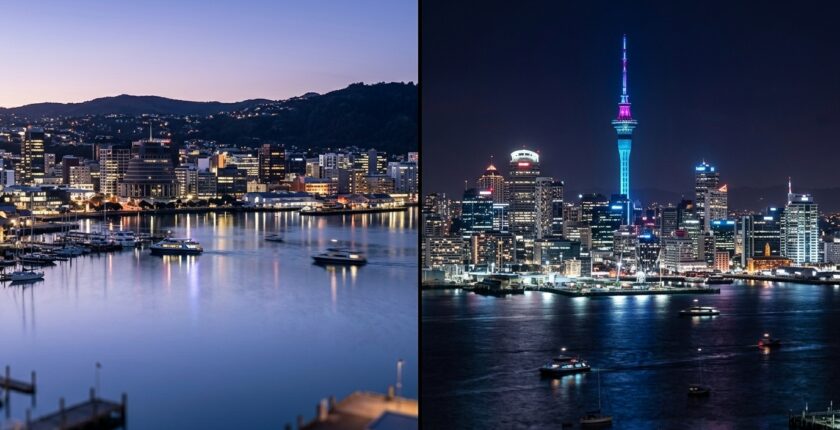
Wellington vs Auckland: Which New Zealand City Suits Your Dancing Style?
Two Cities, Two Different Gigs
When dancers ask about exotic dancer jobs in Wellington vs Auckland, New Zealand, the question usually comes down to one thing: which city will actually work for me? The honest answer is that they suit different performers at different career stages — and the differences are real enough to matter before you book a flight.
New Zealand is one of the more stable markets in the Asia-Pacific region for touring dancers. The industry operates under a regulated licensing framework, venues are accustomed to international performers, and the Calendar Girls & Showgirls New Zealand group — Busama’s current client in the market — runs six R18 venues across Auckland, Wellington, Christchurch and Queenstown on a contractor model with an in-house tipping system and no house fees.
That structure is consistent across the group. What varies is the city itself. Here is what to weigh up.
Auckland: Scale, Foot Traffic and a Bigger Transient Market
Auckland is New Zealand’s largest city by a considerable margin — roughly a third of the country’s entire population lives there. That scale shows up in the adult entertainment market: more venues, more foot traffic on a given night, and a larger pool of both regulars and one-off visitors.
The city draws significant international arrivals, corporate travellers and domestic visitors for events, which tends to support more consistent weeknight trade than a smaller city can offer. Cruise ship seasons, major sporting fixtures and large conventions all move through Auckland in a way that creates identifiable peaks.
The flip side is cost of living. Auckland is one of the most expensive cities in the Southern Hemisphere for accommodation. As a touring performer, your net position depends heavily on what the venue provides or what you can negotiate — so it is worth confirming accommodation arrangements in detail before you accept a placement. Check the current listing details for Auckland Calendar Girls, the Auckland Showgirls listing, and the Auckland pole and exotic dancing listing for what is currently on offer.
What Auckland Tends to Suit
Performers who do well in larger, busier rooms. Dancers who are comfortable working a mixed crowd — corporate, tourist and local — and who can adapt their approach across different energy levels on the same night. If you have built your income around volume and variety, Auckland’s scale is an asset.
Wellington: Compact, Loyal and Politically Connected
Wellington is New Zealand’s capital and, per capita, one of the most economically active cities in the country. The population is smaller than Auckland’s — around 215,000 in the urban area — but it is dense, well-educated and has a strong culture of going out. The hospitality scene punches well above its size.
Because Wellington is the seat of government and home to a large public service workforce, the midweek corporate crowd is a genuine feature of the market. Parliamentary sitting weeks, public service conferences and visiting delegations create demand patterns that a dancer who pays attention to the calendar can plan around.
The city is compact enough that word travels. Regulars in Wellington tend to be genuinely regular — performers who build rapport and return to the same venue report that the loyal-customer dynamic is stronger here than in a larger, more transient city. That is an advantage for dancers who invest in relationships rather than pure volume.
Cost of living is meaningfully lower than Auckland, which improves the net picture for a touring performer even if headline earnings on a given night are more modest. Wellington winters are famously wet and windy, which does affect foot traffic — something to factor into your timing if you have flexibility on when you tour.
Current Wellington listings include the Wellington Calendar Girls placement and the Wellington exotic dancer jobs listing — check both for current terms.
What Wellington Tends to Suit
Performers who build an income through repeat business and personal connection rather than sheer foot traffic. Dancers who prefer a more intimate room and a crowd that actually gets to know them. If you are earlier in your touring career and want a city where you can find your feet without being overwhelmed, Wellington’s scale is friendlier.
Key Structural Differences to Confirm Before You Accept
Regardless of which city interests you, there are questions worth asking before you commit to any placement. These apply to both Wellington and Auckland — and to any New Zealand venue.
Accommodation
What is provided, at what standard, and for how long? Is it close to the venue? Is it shared or private? Touring in a city where accommodation costs are high makes this a material part of your financial position, not a secondary detail.
Contractor Terms
New Zealand venues in this sector typically engage dancers as independent contractors rather than employees. That means you are responsible for your own tax obligations — GST registration thresholds, income tax filing and record-keeping are all on you. The Calendar Girls NZ group page covers the contractor model; for tax specifics, speak to a New Zealand accountant or check the Inland Revenue Department’s guidance directly.
Seasonal Timing
New Zealand’s summer runs November through March. Auckland’s trade peaks are spread more evenly across the year due to its size and international traffic. Wellington’s peaks are more tied to the parliamentary and corporate calendar. Neither city has a dead season exactly, but both have quieter stretches — Wellington’s weather-affected winter months being the most predictable one.
Work Rights
You must already hold legal working status for New Zealand before applying. Confirming that is entirely your own responsibility — check the New Zealand Immigration website or speak to a qualified migration professional. Busama verifies that applicants hold the right to work; it does not advise on how to obtain it.
What About the Rest of New Zealand?
If neither Wellington nor Auckland is the right fit right now, the Calendar Girls group also operates in Christchurch and Queenstown. Christchurch is New Zealand’s second-largest city and has rebuilt significantly since the 2011 earthquakes — it is a different market again, with a strong local base. Queenstown is a resort and adventure-tourism town with pronounced seasonal peaks driven by international visitors. Both have live listings: Christchurch and Queenstown.
Touring the full group — moving between cities across a longer trip — is a legitimate strategy for performers who want variety and want to extend their time in market. It is worth discussing with the Busama team if that interests you.
Making the Call
There is no universally better answer between Wellington and Auckland. The right city depends on the kind of performer you are, what stage of your career you are at, how long you plan to stay, and what you need from the financial structure of the placement.
What the comparison does make clear is that New Zealand — and this group specifically — is one of the more straightforward markets for an international touring dancer: a consistent contractor model, no house fees, an in-house tipping structure, and venues that are accustomed to working with placed talent.
If you are ready to put yourself forward, the quick-apply form is the fastest way to start the conversation. If you want to understand how the placement process works before you apply, the How It Works page covers it. Conditions and specific terms change — contact the Busama team to confirm the current details for whichever city you are considering.